

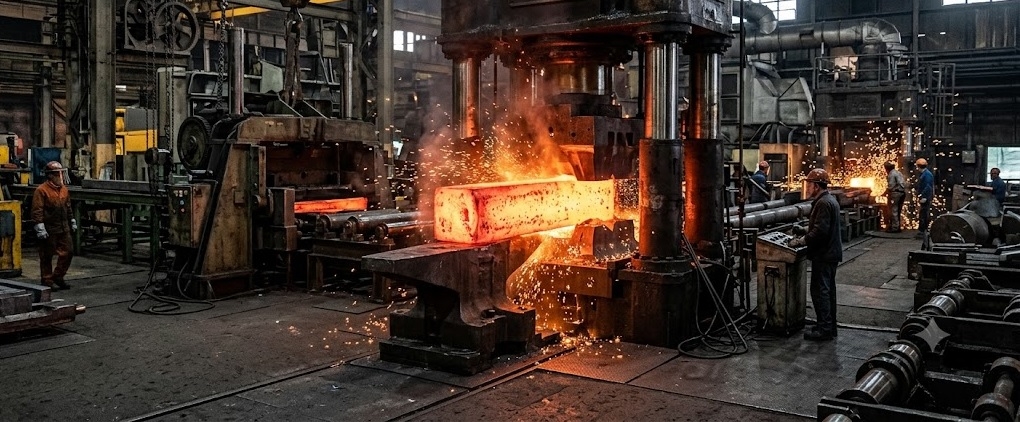

Steel is primarily made from iron and carbon mixture with various add-ons like nickel, chromium, manganese, and molybdenum to aid in enhancing the steel's properties such as hardness, strength, and anti-corrosion qualities. Steel forging companies utilize the crack of heated, or sometimes cold steel among other processes, into particular components through the application of compressive force. It is in the business of producing steel parts for the purposes of automobiles, railway, constructions, oil and gas extraction, airplane manufacturing, etc. The firms utilize several forging machinery including hydraulic presses, mechanical presses, and hammering machines among others. The steel forging companies rely on heating apparatus, molds, and heat treatment mechanisms in their manufacturing processes. They also utilize cutting machines, CNC machines, and inspection tools throughout the entire process of manufacturing parts. Therefore, combining different materials, equipment, and expertise in the production process aids steel forging firms to produce accurate and dependable steel parts.
How to Evaluate and Find Reliable Steel Forging Companies in India
In order to assess steel forging companies, buyers should examine their experience in production, production capacity, material quality, level of expertise and ability to fulfill specifications. In addition, it is crucial to check the level of quality certification and testing facilities, delivery schedule, prices and clients’ satisfaction before choosing a supplier. It is advisable to check whether the company uses modern equipment for forging, heat treatment and quality control. When comparing steel forging suppliers, they should look for those companies which can produce items according to the industry standards and guarantee their quality. In order to find the right companies one can use Google, industry directories, exhibitions, associations, B2B platforms and industry recommendations. One should visit the manufacturing site and arrange for products samples and technical documents.
Quality control factors that steel forging companies cannot neglect
Steel forging enterprises have to keep in mind the important factors of quality control for steel forged products, as these factors directly influence the performance, precision, life span, and safety of the products manufactured. It is important that the raw materials undergo examination prior to their production in terms of chemical composition, type of material as well as properties of the material used in the manufacturing process. Monitoring of heating, forging and cooling parameters is also essential to prevent any defects such as cracks or laps. It is also essential to check dies, tolerances, surface finish, and results of the heat treatment throughout the manufacturing process. Different techniques of hardness tests, tensile tests, visual test, and non-destructive test methods such as ultra-sonic test are used for detection of defects inside and on the surface of the forged goods. Regular maintenance of machines, appropriate calibration of devices, reliable documentation, and qualified engineers will help to improve the consistency of the manufactured goods.
Conclusion
In summation, steel forging companies contribute significantly to making high-quality, solid, and precise components used in several industries. Buyers should have some knowledge regarding the structure of steel, the forging procedure, and the type of machinery used in the creation of steel components, so that they are better informed when it comes to their purchasing choices. It is advisable for buyers to assess their possible suppliers based on their manufacturing history, production capacity, availability of modern equipment, quality certificates, and customers’ feedback. Moreover, it is crucial for companies involved in steel forging to also control the quality of the products they make. In order to be able to ensure the quality of the products, companies should inspect the raw materials, measure the temperatures in the course of production process, check limits and sizes, and test finished products. All of these processes, carried out in combination with machinery, professional staff, and inspection techniques, ensure the decrease of production errors.
