


From Palm Leaves to Masterpieces: How Rural Sri Lankan Artisans Turn Simple Materials Into Art
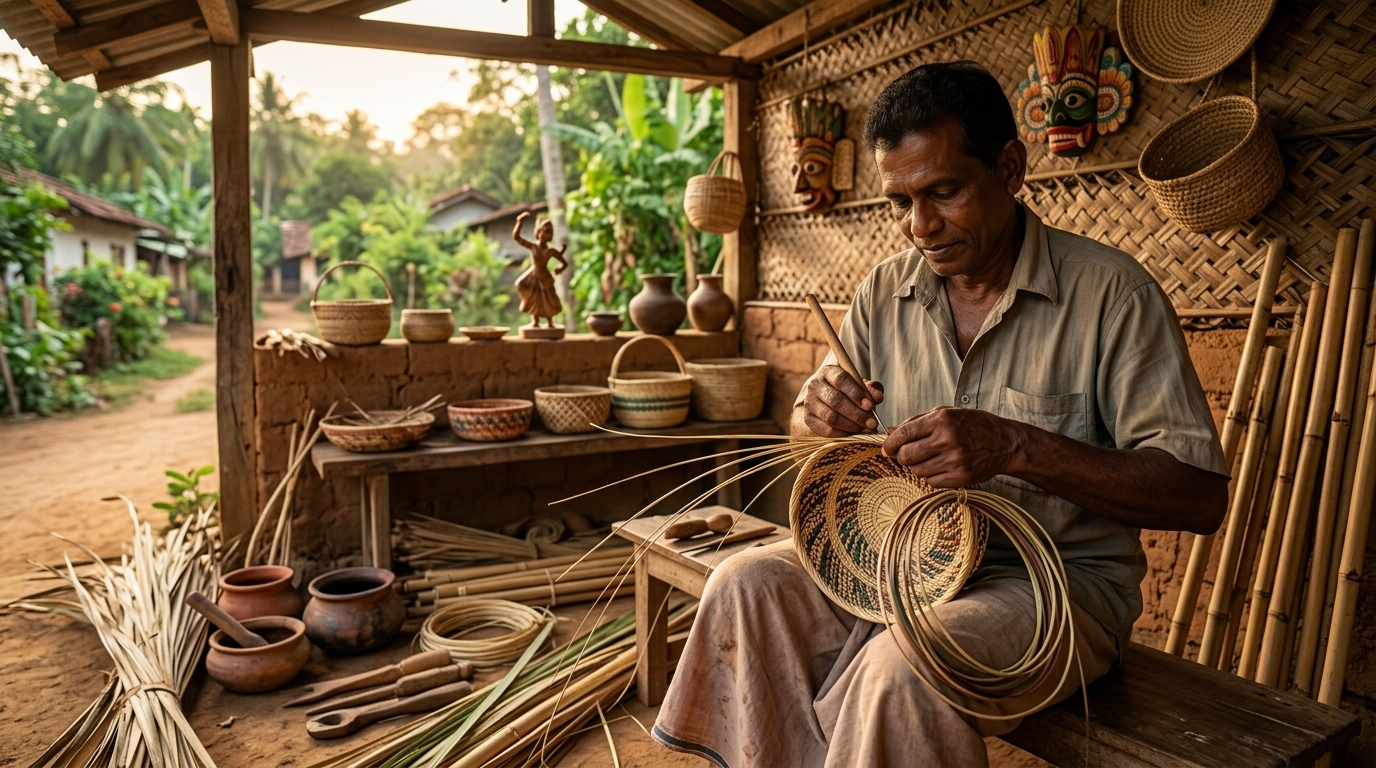
What if some of the most beautiful things in Sri Lanka aren't made in expensive studios—but in small village workshops using materials that most people would overlook?
A strip of palm leaf.
A piece of clay.
A block of wood.
A handful of natural fibre.
In the hands of a skilled artisan, these ordinary materials can become baskets, masks, sculptures, jewellery, household objects and decorative pieces that carry generations of knowledge.
Sri Lanka's traditional crafts are not simply souvenirs. They are part of the island's cultural heritage—and behind every handmade object is a combination of patience, technique, local materials and creativity.
The Art Begins With What Nature Provides
For generations, rural artisans have worked with materials available in their surroundings.
Palmyrah and other palm leaves can be processed and woven into mats, baskets, boxes and decorative items.
Cane and bamboo can be transformed into furniture, baskets and useful household products.
Clay becomes pottery and traditional decorative objects.
Wood can become masks, carvings, furniture and religious or ceremonial objects.
Natural fibres can be twisted, braided and woven into practical products and artwork.
The important idea is simple:
The material doesn't have to be expensive for the finished creation to be valuable.
The artisan's skill is what transforms it.
1. Weaving Turns Flat Leaves Into Functional Art
Walk into a traditional craft village and you may see something that initially looks incredibly simple: thin strips of dried leaves or fibre.
But watch an experienced craftsperson work with them and the process becomes fascinating.
Individual strips are selected, prepared and woven together according to specific patterns.
The result can be a mat, basket, container, wall decoration or another useful object.
What makes these pieces special is the combination of function and design.
The object isn't merely decorative.
It was often created to be used.
That connection between everyday life and artistic expression is one of the defining characteristics of traditional craft.
2. Clay Becomes More Than a Pot
Sri Lanka has a long tradition of pottery and clay craftsmanship.
A lump of earth can become a cooking vessel, water container, lamp, ornament or decorative sculpture.
The transformation requires much more than simply shaping clay.
The artisan needs to understand moisture, thickness, form, drying and firing.
Small differences in temperature or technique can affect the final result.
And because much of the process is done by hand, no two pieces are necessarily identical.
That slight imperfection is part of the charm.
3. Wood Carries Stories
Sri Lankan wood carving is another example of how a natural material can become a cultural expression.
An artisan begins with a piece of wood.
Then comes the slow process of cutting, shaping, carving and refining.
Traditional designs may include animals, flowers, mythical figures and religious or cultural motifs.
In places such as the Ambalangoda region, traditional mask carving has become particularly associated with Sri Lankan cultural heritage.
A finished mask can look dramatic and colourful.
But the real story is underneath the paint—the knowledge required to create the form in the first place.
4. Masks Are More Than Decorations
Traditional Sri Lankan masks are closely connected with performance traditions and ritual culture.
Different masks can represent different characters, animals and supernatural figures.
The artisan therefore isn't simply making an attractive object.
They are working within a visual language that has been passed between generations.
This is why buying a handmade mask can mean more than buying a decoration.
You're taking home an object connected to a much larger cultural story.
5. Every Handmade Piece Contains Time
Machine production is designed around speed and consistency.
Traditional craft often works differently.
An artisan may spend hours—or considerably longer—preparing materials, shaping a piece, weaving a pattern, carving details or finishing the surface.
That time is part of the product's value.
When you buy something handmade, you aren't paying only for the raw material.
You're paying for skill, experience, labour and cultural knowledge.
This is something worth remembering when comparing a handmade Sri Lankan craft with a mass-produced imitation.
6. Rural Craft Is Also About Sustainability
Traditional artisans often work with renewable, locally available or naturally occurring materials.
That doesn't automatically make every traditional craft product environmentally sustainable—harvesting methods, transportation, chemical treatments and production practices still matter.
But using local materials and making durable products can offer an alternative to disposable, mass-produced goods.
A well-made basket that lasts for years has a very different environmental story from an object designed to be thrown away after a short period.
For modern consumers, this creates an interesting connection between traditional craftsmanship and contemporary interest in sustainable design.
7. The Biggest Threat Isn't Lack of Talent
Sri Lankan artisans haven't suddenly forgotten how to make these products.
The bigger challenge is often whether younger generations will continue learning the skills.
Traditional craftsmanship requires time to master.
But young people also have access to modern careers, technology and urban opportunities.
If traditional skills don't provide a sustainable income, fewer young people may see them as a realistic career.
That means supporting artisans isn't simply about preserving old objects.
It can also mean helping preserve the knowledge of how those objects are made.
How Modern Consumers Can Support Local Artisans
You don't need to become a collector to make a difference.
Start with your purchases.
Buy directly when possible
Look for reputable artisan cooperatives, craft villages, local workshops and established craft businesses.
Direct purchasing can help more of the value reach the people who actually make the product.
Ask about the material
If you're buying a handmade product, ask:
- What material was used?
- Where was it sourced?
- Was it handmade locally?
- How should it be maintained?
- Who made it?
The answers can make the purchase much more meaningful.
Choose quality over quantity
Instead of buying several cheap decorative objects, consider buying one well-made piece that you genuinely appreciate.
Use it.
Display it.
Keep it for years.
Tell the story
If you purchase a beautiful handmade item, don't just photograph the finished product.
Share the story behind it.
People connect with craftsmanship when they understand the human effort behind the object.
The Future of Sri Lankan Craft Could Be Traditional and Modern
Preserving traditional craft doesn't mean freezing it in the past.
There is enormous potential for artisans to combine traditional techniques with contemporary design.
Imagine a traditional weaving technique used to create modern lighting.
Traditional wood carving incorporated into minimalist furniture.
Natural fibres transformed into modern fashion accessories.
Traditional pottery redesigned for contemporary homes.
The technique remains.
The application evolves.
That could allow traditional craftsmanship to become relevant to a new generation while retaining its cultural identity.
Before You Buy Your Next “Souvenir”
Next time you visit a Sri Lankan craft market, don't just ask:
“How much is it?”
Ask:
“Who made this?”
That simple question changes the way you see handmade products.
You begin to notice the material.
The pattern.
The technique.
The tiny imperfections.
The hours of work.
And the generations of knowledge behind the finished object.
A palm leaf is ordinary.
A piece of clay is ordinary.
A block of wood is ordinary.
But in the hands of a skilled Sri Lankan artisan, ordinary materials can become extraordinary stories.
And perhaps that is the real beauty of traditional craft.

