


Hidden Waterfalls in Sri Lanka You May Never Have Heard Of — 10 Secret Escapes Beyond the Tourist Trail
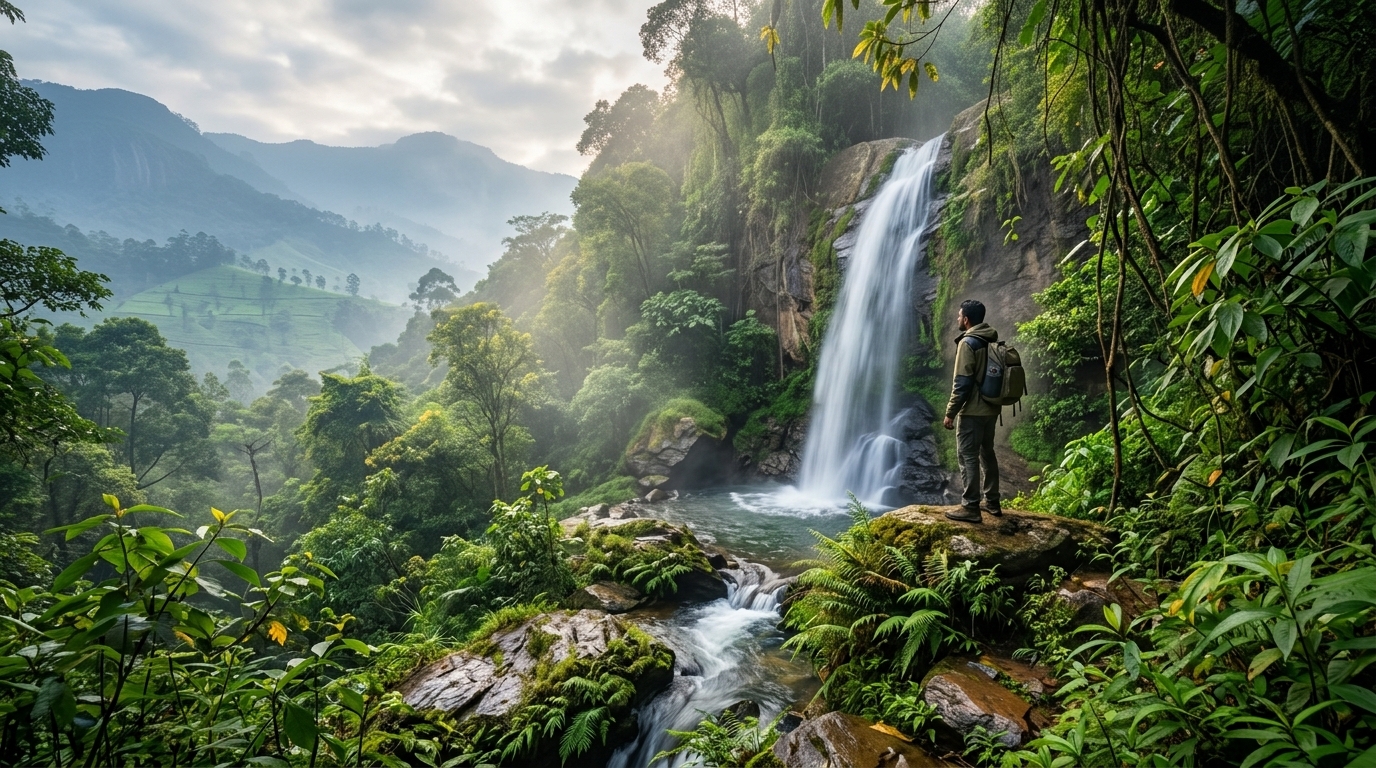
Sri Lanka is famous for waterfalls.
But if the only names you know are Diyaluma, Bambarakanda, Ravana and Dunhinda, you have barely scratched the surface.
Across the island's mountains and forests are smaller, quieter cascades—some reached by village roads, some by forest trails, and some requiring local knowledge to find safely. Recent Sri Lankan travel guides continue to highlight lesser-known falls around the hill country, particularly away from the main tourist routes.
The real attraction isn't simply the waterfall itself.
It is the journey: misty mountains, tea estates, forest paths, streams, birdsong and the feeling that you've discovered a side of Sri Lanka that doesn't appear on every itinerary.
Here are 10 lesser-known waterfalls worth putting on your exploration list.
1. Lanka Ella — The Waterfall With an Island-Shaped Pool
Near the Bambarakanda area in Badulla District is Lanka Ella, a quieter forest waterfall associated with a distinctive pool whose shape resembles Sri Lanka.
Unlike major roadside waterfalls, reaching Lanka Ella involves walking through forest terrain.
That extra effort is part of the appeal.
The area is comparatively quiet, making it attractive for photographers and hikers looking for a more wilderness-oriented experience. However, the pool should not automatically be treated as a swimming spot—the depth, submerged rocks and current can change with rainfall.
Why go: Forest atmosphere, unusual rock formation and fewer visitors.
2. Uduwara Ella — Hidden Near Sri Lanka's Tallest Waterfall
Most people who travel toward Bambarakanda are focused on the country's tallest waterfall.
But nearby, the landscape hides lesser-known cascades.
Uduwara Ella is one of them.
It is located in the mountainous area around Kalupahana, and reaching it involves trekking from the road rather than simply stepping out of a vehicle.
One source estimates the waterfall at roughly 60–80 metres, although measurements vary, so it is better to appreciate it as a remote mountain waterfall rather than obsess over the exact number.
Why go: A chance to explore beyond the famous Bambarakanda viewpoint.
3. Nagadowa Ella — Another Quiet Cascade Near Kalupahana
Uduwara Ella isn't the only lesser-known waterfall in this part of the country.
Nagadowa Ella is also reported in the same wider Kalupahana–Bambarakanda landscape.
The important thing about places like this is that they are not conventional “stop the car and take a selfie” destinations.
They are exploration destinations.
That means trail conditions, weather, water levels and access permissions matter much more than they do at a developed tourist attraction.
Why go: Remote scenery and the opportunity to experience Sri Lanka's hill country away from the main tourist circuit.
4. Galagama Falls — A Small Waterfall With a Remarkable Shape
Near Belihuloya lies Galagama Falls, also known locally as Pahantuda Ella.
It is much smaller than Bambarakanda or Diyaluma, but that is precisely what makes it interesting.
The waterfall drops into a deep pool surrounded by smooth rock, creating a distinctive setting that feels very different from Sri Lanka's enormous plunging waterfalls.
Historical university material on Sri Lankan agriculture and tourism describes the route as passing through scrub jungle, paddy fields and rocky river terrain.
Why go: A smaller, atmospheric waterfall experience combined with rural scenery.
5. Elgin Falls — A Waterfall Hidden in the Tea Country
Imagine travelling through the cool highlands around Nuwara Eliya, surrounded by tea estates and misty mountains—and suddenly spotting a waterfall in the landscape.
That's part of the charm of Elgin Falls.
The waterfall is located in the Elgin tea estate near Ambewela, around 18 kilometres from Nuwara Eliya, and stands roughly 25 metres high. It can also be viewed from the railway line between Nanu Oya and Ambewela.
It is not one of Sri Lanka's gigantic waterfalls.
Instead, its setting makes it special.
Why go: Cool climate, tea-country scenery and an unusual railway viewpoint.
6. Gotuwala Ella — A Quiet Cascade Near Ella
Ella has become one of Sri Lanka's most popular travel destinations.
But even around heavily visited Ella, there are waterfalls that receive far less attention.
Gotuwala Ella, near Demodara, is one example.
Travel information describes the waterfall as being accessed around the railway landscape between Ella and Demodara, making the surrounding journey part of the experience.
This is a perfect reminder that exploring a popular destination doesn't necessarily mean following the popular itinerary.
Why go: Combine waterfall exploration with Ella's dramatic railway scenery.
7. Kithal Ella — A Smaller Alternative Around Ella
Another lesser-known name appearing in guides to the Ella area is Kithal Ella.
Compared with the headline attractions around Ella, it offers a quieter style of nature experience.
The lesson here is important: don't judge a waterfall only by height.
A smaller cascade surrounded by thick vegetation can sometimes create a much better experience than a huge waterfall beside a busy road.
Why go: For a slower, more intimate nature experience around Ella.
8. Huluganga Falls — A Forest Escape Near Kandy
You don't necessarily have to travel deep into the southern or Uva mountains to find hidden waterfalls.
Huluganga Falls, in the wider Kandy hill-country region, is another option for travellers looking for a waterfall experience away from the biggest tourist attractions.
The surrounding landscape combines hills, vegetation and rural roads, giving the journey itself a scenic character.
It is particularly interesting for people staying around Kandy who want to explore beyond the city's temples and cultural attractions.
Why go: A convenient starting point for combining hill-country scenery with waterfall exploration.
9. Dothalugala Ella — For the More Adventurous Explorer
Some waterfalls are easy to reach.
Others are destinations where the journey is the adventure.
Dothalugala Ella, in the Balangoda area, has been described as a lesser-known waterfall requiring a more adventurous approach through rural and natural terrain.
For waterfalls like this, preparation matters more than Instagram inspiration.
A local guide, reliable directions and an understanding of current weather and trail conditions can make the difference between an enjoyable hike and a dangerous one.
Why go: For travellers who prefer exploration over sightseeing.
10. The Hidden Upper World of Diyaluma
Diyaluma itself is no longer a secret.
But many visitors experience only the main waterfall.
The upper section is a completely different adventure, with smaller cascades and natural rock pools spread across the landscape above the main drop.
Diyaluma is Sri Lanka's second-highest waterfall at about 220 metres, and the upper levels are one reason the area has become especially popular with adventure travellers.
The important distinction is that a famous waterfall can still contain hidden experiences.
You don't always need to find an unknown waterfall.
Sometimes you simply need to explore beyond the obvious viewpoint.
Before You Chase a “Secret” Waterfall
There is an important side to hidden waterfalls that beautiful photographs don't show.
Remote waterfalls can be dangerous.
Water levels can rise rapidly after rain, rocks become slippery, trails can disappear into vegetation, and mobile-phone coverage may be unreliable.
So before heading into a lesser-known waterfall area:
Check the weather first.
Heavy rainfall upstream can make a waterfall dangerous even when the weather around you looks perfectly fine.
Ask locally about access.
A route that was open last year may be blocked, damaged or privately controlled today.
Don't assume every natural pool is safe for swimming.
Depth, currents, submerged rocks and sudden changes in water level can be difficult to judge from photographs.
Avoid going alone on unfamiliar trails.
For remote locations, travelling with someone who knows the route—or hiring a reputable local guide—is a much better choice.
And perhaps most importantly:
Leave no plastic, food waste or other rubbish behind.
The more people discover Sri Lanka's hidden waterfalls, the more important responsible tourism becomes.
The Best Waterfall May Not Be the Biggest
Sri Lanka has spectacular waterfalls that deserve their fame.
Bambarakanda is the country's tallest at about 263 metres, while Diyaluma reaches roughly 220 metres.
But height isn't everything.
Sometimes the most memorable waterfall is a small cascade reached after walking through a village.
Sometimes it is the sound of water before you can see it.
Sometimes it is standing alone in a forest with mist rising from the rocks.
And sometimes, the best part is knowing that you had to slow down, look beyond the obvious route and explore.
Your Next Sri Lankan Adventure
The next time you plan a trip through Ella, Nuwara Eliya, Belihuloya, Badulla, Kandy or the surrounding hill country, don't just search for the most famous waterfall.
Look beyond the tourist map.
Talk to locals.
Explore responsibly.
And remember that a “hidden” waterfall isn't valuable because it is secret. It is valuable because its natural environment is worth protecting.
Sri Lanka's waterfalls aren't just destinations—they are invitations to explore the island more deeply.
