

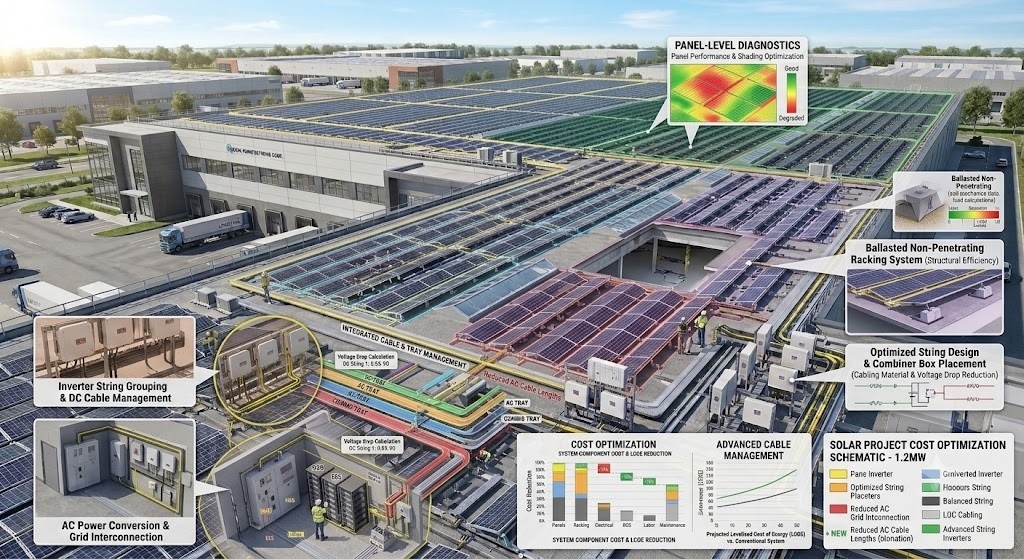

Before selecting the solar panel system, companies can save money by being aware of their electricity usage and available rooftop size, and knowing their daily electricity usage. Check the prices of the reputable distributors and installers. Try to make maximum use of available solar panels and roofs for net metering and battery storage, if necessary. Also find out what incentives and financing options you can use to reduce the initial investment.
Regular maintenance, correct system installation, and proper setup will keep you from expensive repairs and will help you gain maximum profit from the solar panel system. By following all the steps mentioned, the industrial solar panel installation cost will go down, electricity bills will be reduced, and the payback time will be shorter.
What are cost affecting factors for Industrial solar panel installation?
The price of installing solar panels for businesses is influenced by many parameters, such as how many kilowatts or how efficient the installed panels are, how good the inverter is and what kinds of mounting system it uses. The size of the available area for panels, condition of roofs, and if the site needs any preparation would also influence the project cost. Other factors affecting the industrial solar panel installation costs are installation labor costs, costs of wiring and safety equipment, as well as the costs of connecting to the grid. Companies with a high energy demand will often require larger solar installations that lead to substantial initial costs. The distance of the location from connection points, laws in place, and requirements for maintenance lead to changing costs as well. Companies should also compare different prices from suppliers, find out about possible government subsidies and calculate costs in the long-term perspective.
What are essential and non negotiable items for Industrial solar panel installation?
The installation of solar panels in any industrial facility must include essential and non-negotiable components that consist of high-quality solar panels, compatible inverters, sturdy mounting structures, and durable electrical wiring. Moreover, important safety devices like earthing systems, lightning protection, surge protection devices, circuit breakers, and other elements are needed to provide maximum protection. Besides the right roof or ground space, the companies must ensure the stability of the structure and easy access to it for maintenance purposes. The use of certified equipment, the proper design of the system, and compliance with the grid connection approvals and electrical and safety requirements ensure safety of the installation. The business must further provide an appropriate monitoring system, waterproofing of the cables, and fire safety measures. Thus, investment in these components ensures maximum safety of the personnel while providing high level of efficiency in terms of the use of the industrial solar energy system.
Conclusion
To sum up, the process of optimizing the Industrial solar panel installation cost needs lots of planning and selecting quality equipment and understanding the energy needs of the installation. Businesses should analyze various quotations of different suppliers and take advantage of available incentives as well as pay special attention to safety components to avoid unnecessary expenses. Proper design of the system, its professional installation, and ongoing maintenance can guarantee the optimal operation of the system, thus saving money for its owner.
