


Ball Python: The Calm and Fascinating Snake 🐍
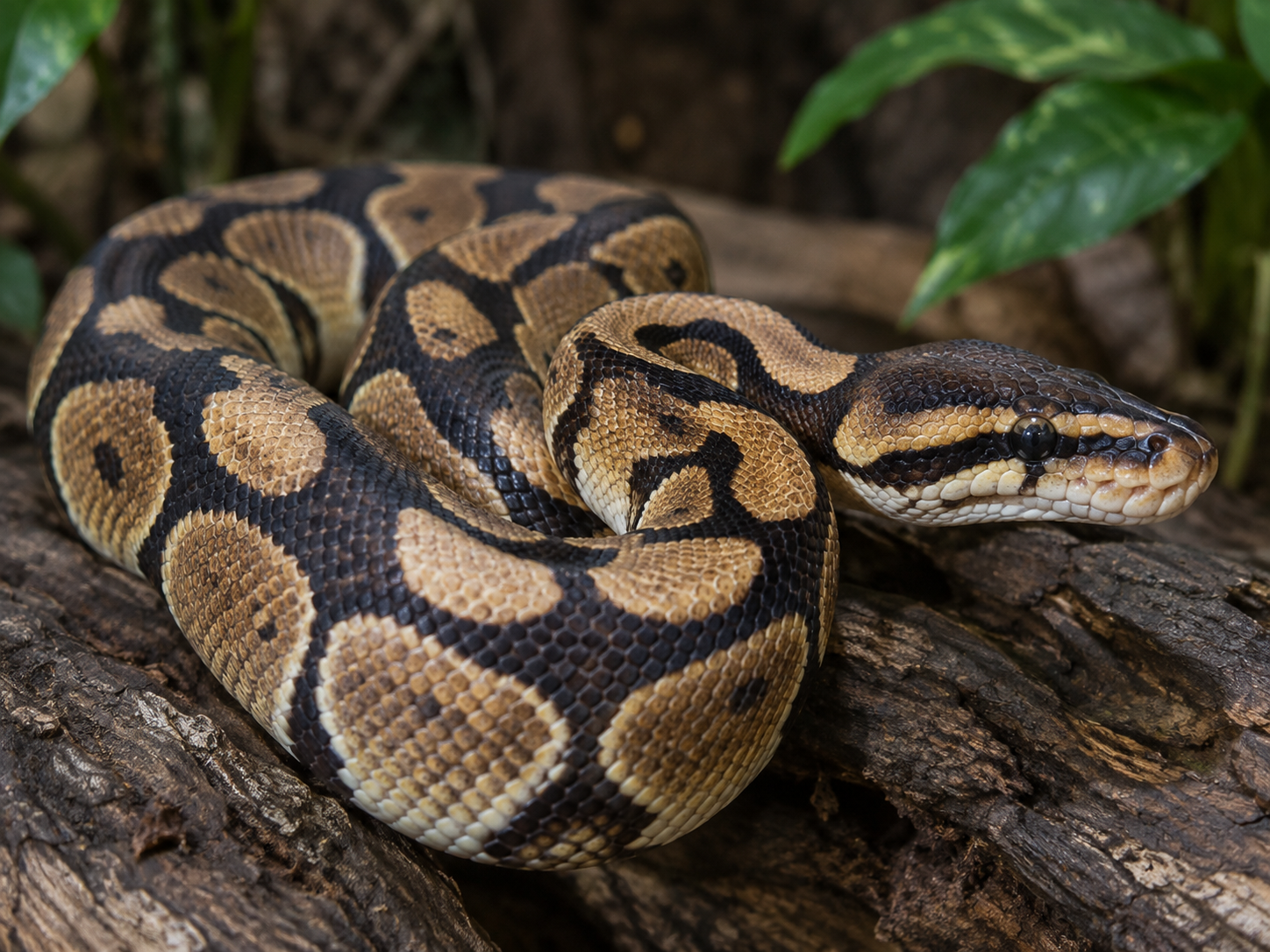
🐍 Ball Python – The Calm and Fascinating Snake
The Ball Python (Python regius) is one of the most popular pet snakes in the world. It is famous for its calm personality, beautiful patterns, manageable size, and unique defensive behaviour.
🌍 Where Do Ball Pythons Come From?
Ball pythons are native to West and Central Africa, where they live in grasslands, savannas, farms, and areas with plenty of hiding places.
They often spend the daytime hiding inside burrows or sheltered spaces and become more active during the evening and night.
⚽ Why Is It Called a “Ball” Python?
The name comes from its unusual defence behaviour.
When a ball python feels frightened or threatened, it often curls its entire body into a tight ball, hiding its head safely in the middle.
Instead of immediately attacking, its first reaction is usually to protect itself.
📏 How Big Can They Grow?
Ball pythons are considered relatively small compared with many other python species.
Adults usually grow around 3–5 feet (90–150 cm) long, although some individuals can become slightly larger.
Females are generally bigger and heavier than males.
🐭 What Do Ball Pythons Eat?
Ball pythons are carnivores.
In the wild, they mainly eat small animals such as:
-
Rats
-
Mice
-
Other small mammals
-
Occasionally birds
Like other pythons, they are constrictors. They grab their prey and use their muscular body to constrict it before swallowing it whole.
☠️ Are Ball Pythons Venomous?
No.
Ball pythons are non-venomous snakes.
They do not have venom and generally rely on constriction to catch prey. They are also known for being relatively calm when properly handled, although every snake should still be treated carefully and respectfully.
😌 Why Are They Popular Pets?
Ball pythons are popular among reptile keepers because they usually have a calm temperament and do not grow extremely large.
They also come in many different colour and pattern variations called morphs.
Some ball python morphs can look completely different from the normal wild pattern, including combinations of white, yellow, brown, black and other colours.
🏠 Keeping a Ball Python
A pet ball python needs much more than simply being placed inside a tank.
It requires:
🌡️ Proper temperature:
Ball pythons need a warm area and a cooler area so they can regulate their body temperature.
💧 Correct humidity:
Suitable humidity helps them stay healthy and shed their skin properly.
🪵 Hiding places:
They naturally like secure, dark hiding spots.
💦 Fresh water:
Clean drinking water should always be available.
🍽️ Proper feeding:
Their food must be appropriately sized for the snake.
Before keeping any exotic snake, owners should research its needs carefully and make sure keeping that species is legal in their country.
⏳ How Long Do Ball Pythons Live?
Ball pythons can live for a surprisingly long time.
With good care, captive ball pythons commonly live for 20–30 years, and some individuals have lived even longer.
Because of this, owning one is a long-term responsibility.
🥚 Reproduction
Ball pythons lay eggs.
A female may lay several eggs at a time and coil her body around them for protection while they develop.
Baby ball pythons hatch as fully independent young snakes.
🌿 Importance in Nature
Although some people fear snakes, snakes play an important role in ecosystems.
Ball pythons help control populations of rodents and other small animals, helping maintain the natural balance of their environment.
🐍 Final Thoughts
The Ball Python is a fascinating example of how beautiful and specialised snakes can be.
Its calm behaviour, defensive ball-shaped posture, beautiful patterns and relatively small size have made it one of the world's best-known pet snakes.
However, a ball python is still a wild animal species with specific environmental, feeding and health requirements. Anyone interested in keeping one should learn about the species properly and provide responsible long-term care.
Respect wildlife. Learn about animals. Protect nature. 🌿🐍
