


Nature Is Our Healer: What Happens When We Give Our Minds a Break From the Modern World?
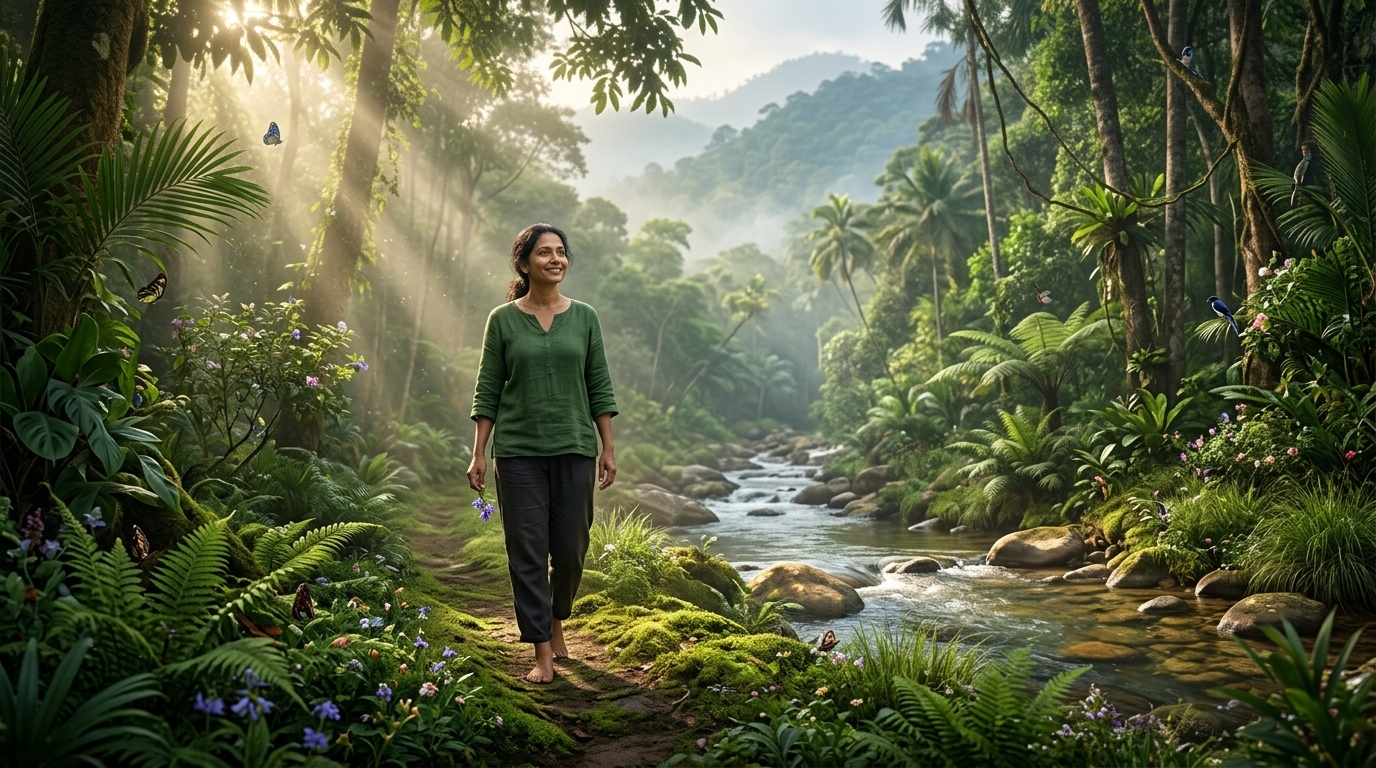
- What if one of the simplest ways to feel better doesn't require an app, a subscription, or another productivity hack?
Step outside.
A few minutes among trees, sunlight, fresh air and natural surroundings can feel remarkably different from spending another hour surrounded by screens, traffic and artificial environments.
Modern life gives us extraordinary convenience—but it also keeps many of us constantly connected, stimulated and busy. Nature offers something very different: space to slow down.
Nature Doesn't Replace Medicine—but It Can Support Wellbeing
Calling nature a “healer” doesn't mean a walk in the forest can cure an illness or replace professional medical care.
The science is more nuanced—and still fascinating.
Research has linked exposure to natural environments with aspects of mental and physical wellbeing, including stress reduction, mood and relaxation. A major systematic review and meta-analysis published in The Lancet Planetary Health found that greater exposure to green spaces was associated with better health outcomes across several categories, although the strength of evidence varied between outcomes.
Nature should therefore be viewed as a supportive part of a healthy lifestyle, not a substitute for appropriate medical treatment.
Why Does Nature Feel Different?
Think about the difference between two mornings.
In one, you wake up and immediately check messages, notifications, emails and social media.
In the other, you step outside and hear birds, feel sunlight on your skin and notice trees moving in the breeze.
The second experience doesn't demand that you respond to anything.
Nature gives your attention somewhere else to go.
This may be one reason natural environments can feel mentally restorative. Instead of constantly processing notifications, advertisements and digital information, you can simply observe what is around you.
Forests, Parks and Green Spaces Can Become Your Reset Button
You don't need to travel to a remote rainforest to experience nature.
A local park can work.
A garden can work.
A tree-lined street can work.
A beach can work.
Even a few plants on a balcony can introduce natural elements into an otherwise urban environment.
The important thing is to actively experience the environment rather than simply passing through it.
Put the phone away for a few minutes.
Listen.
Look around.
Notice the temperature and wind.
Pay attention to the sounds around you.
Instead of turning the walk into another productivity task, allow yourself to simply be there.
Sunlight Is More Than a Beautiful View
Morning and daytime outdoor light also play an important role in our daily environment.
Light helps regulate the body's circadian system—the biological timing system that influences sleep and wakefulness.
Getting outside during the day can therefore be a simple way to increase exposure to natural light while also creating an opportunity to move.
You don't need to stare directly at the sun.
In fact, you should never look directly at the sun, because doing so can damage your eyes.
Enjoy daylight safely while walking, sitting outdoors or spending time in a naturally lit environment.
Nature Can Make Exercise Feel Easier
Exercise doesn't always have to happen inside a gym.
Walking through a park, hiking a trail, cycling outdoors or swimming can combine physical activity with exposure to natural surroundings.
That combination can make movement feel less like a chore and more like an experience.
For someone who struggles to stay consistent with exercise, changing the environment may help.
Instead of saying:
“I need to exercise for an hour.”
Try:
“I'm going for a walk and I'm going to explore somewhere.”
The activity remains beneficial—but the experience becomes more enjoyable.
The Ocean Has Its Own Kind of Calm
There is something uniquely powerful about standing beside the sea.
The sound of waves is repetitive. The horizon creates visual openness. The movement of water gives the mind something simple to observe.
Whether you're walking along a beach, sitting beside a lake or watching a river flow, water can create a natural pause from the intensity of everyday life.
You don't have to do anything.
Sometimes watching is enough.
Gardening Is Another Way to Reconnect
You don't need to hike through a forest to connect with nature.
You can grow it yourself.
Planting flowers, vegetables, herbs or trees creates a direct relationship between your actions and the natural world.
You water something.
You wait.
You observe.
Eventually, something grows.
That process can be surprisingly grounding in a world where we are accustomed to instant results.
Gardening also creates opportunities for physical activity and time outdoors while turning an ordinary space into something alive.
Try a “Nature Reset” This Week
You don't need to completely change your lifestyle.
Try this simple experiment for seven days.
Day 1: Spend 10 minutes outside without your phone.
Day 2: Take a slow walk somewhere with trees.
Day 3: Sit outside and listen to natural sounds for 10 minutes.
Day 4: Watch the sunrise or sunset safely.
Day 5: Visit a park, garden, beach or other natural space.
Day 6: Plant or care for something.
Day 7: Take a longer outdoor walk and notice how you feel afterward.
Don't worry about taking the perfect photograph.
Don't turn every moment into content.
Experience it first.
Leave Your Phone Behind—At Least Sometimes
One of the most powerful things about nature is that it doesn't require your attention in the way your phone does.
Your phone wants you to scroll.
Your inbox wants a reply.
Social media wants another minute.
Nature doesn't ask for anything.
It simply exists.
That doesn't mean technology is bad. Technology is incredibly useful.
But constant digital stimulation can make it difficult to notice the physical world around us.
Creating intentional screen-free outdoor time can give your mind a different kind of experience.
We Don't Need More Nature Content—We Need More Nature
It's easy to spend 20 minutes watching beautiful forests, mountains and beaches on a screen.
But a video of a waterfall isn't the same as standing beside one.
A photograph of a sunset isn't the same as feeling the evening air.
A virtual garden isn't the same as touching soil.
This is perhaps the most important lesson:
Don't only consume nature digitally. Experience it physically.
Nature Is a Reminder to Slow Down
Trees don't rush.
Rivers don't check notifications.
Flowers don't compare their progress with the flower next door.
Nature operates according to its own rhythms.
And perhaps that's part of what makes spending time outdoors feel so refreshing.
It reminds us that not everything has to happen immediately.
The Takeaway
Nature isn't a magical cure for every problem.
But it can be a powerful companion to a healthier life.
It can encourage movement, create opportunities for reflection, reconnect us with the physical world and give our attention a break from constant digital stimulation.
So the next time you're feeling overwhelmed, don't automatically reach for another screen.
Open the door.
Walk outside.
Find a tree.
Listen to the wind.
Watch the sky.
Feel the ground beneath your feet.
Sometimes, the reset we are looking for isn't something we need to download.
It's already growing all around us.
